
Checked by the Top One Trader editorial team, experienced traders and analysts are committed to providing reliable, practical insights for funded trading success.
Blowing a funded account feels like a disaster, but most traders don’t understand why it happened or what they should do next. The truth is far less dramatic than it looks. Your journey isn’t over, and you’re not locked out of future opportunities. What matters now is understanding why the breach happened and how to protect your capital going forward.
In this guide, you’ll learn what blowing a funded account really means, what actually happens after a breach, and how to recover with a more structured and disciplined approach.
Key Takeaways
- Blowing a funded account simply removes your access to the firm’s capital. It happens when you hit a drawdown limit or violate one of the firm’s trading rules.
- Recovery is fully possible with the right discipline. Most prop firms allow traders to retry, and rebuilding starts with reviewing mistakes, correcting them, refining risk management, and following a structured trading plan.
What It Means to Blow a Funded Trading Account?
Prop trading has opened the door for thousands of retail traders to access trading capital they could never deploy on their own. A funded trading account gives you large capital to trade with, the freedom to execute your strategies, and the opportunity to earn a share of the profits. Yet the entire model relies on one fundamental condition: you must protect the capital you are given.
When a trader breaks the firm’s rules, reaches the maximum drawdown limit, which means losing more than the allowed risk per day or overall, or breaches other rules set by the prop firm, such as trading during high-impact news or using HFT high-frequency trading strategies, the funded account is considered blown or breached.
How Funded Accounts Work in Prop Trading?
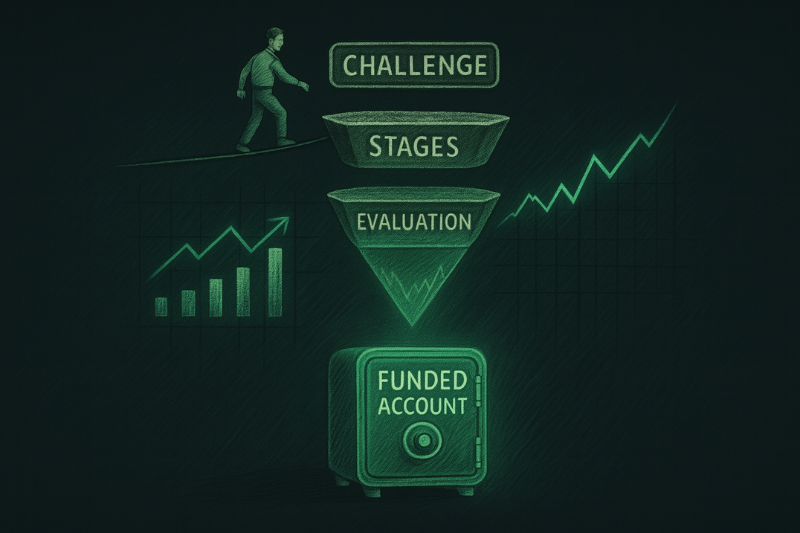
A funded trading journey starts by choosing the type of account you want. Most prop firms offer one-step evaluations, two-step evaluations, or instant funded accounts, and you select the capital size you wish to trade.
After choosing the account, the trader must understand the rules and objectives clearly. This includes knowing drawdown limits and any additional trading restrictions. Sticking to these rules is essential to avoid breaches.
The trader then enters the evaluation, which may be one or two phases. Each phase has a profit target expressed as a percentage that must be reached while respecting all the firm’s rules and risk limits. Passing the evaluation leads to a funded account, where the same rules still apply, and payouts are given based on the agreed profit split.
If a rule is broken, some firms send a warning, and repeated violations or hard rule breaches, such as exceeding a drawdown limit, will result in the account being breached and access to the capital being removed.
Drawdown Limits and Firm Rules You Must Respect
Every funded account operates under strict risk parameters. These rules vary slightly between proprietary trading firms, but they usually include:
- A maximum overall drawdown, often between eight and ten percent
- A daily loss limit, often between four and five percent
- Mandatory use of stop losses
- Restrictions on overnight or high-impact news trading in some firms
- Minimum trading days or activity requirements
- Consistent position sizing based on sound risk management
- Avoiding prohibited strategies in some firms, such as HFT or martingale approaches
Breaking any of these rules triggers an automatic breach. Even if the market later moves in your favour, a breach remains final. These rules exist to protect the firm’s capital and to ensure that traders maintain disciplined, responsible risk management at all times.
Ready to start your funded trading journey the right way?
If you want a programme built around clear rules, realistic drawdowns, and a fair evaluation process, explore Top One Trader’s challenges and choose the account type and capital size that fit your approach.
What Happens Immediately After You Blow the Account?
Blowing a funded account can feel dramatic, especially for newer prop traders. Some imagine large bills, hidden losses, or unexpected penalties. In truth, the consequences are far more straightforward.
Do You Owe Money to the Prop Firm?
This is the first question most traders ask, and the answer is almost always no. Legitimate proprietary trading firms do not require you to repay losses generated on a funded account. When you reach the maximum drawdown or violate a rule, the firm closes the account to prevent further losses. There is no personal financial liability, no debt, and no obligation to reimburse the firm.
If you passed the challenge and became funded, the worst outcome is losing your funded status, along with the time and effort you invested to earn it.
Losing Access to the Firm’s Capital
When you blow the account, the firm simply removes your access to the trading capital. Your login might be disabled, your account might be labelled as breached, or your funded dashboard might be reset.
This does not mean you are banned. Many prop trading programmes allow traders to attempt the challenge again, sometimes with an instant retry option. Your trading performance does not follow you from firm to firm, and your record of previously blown accounts is private between you and that specific firm.
Impact on Future Challenges and Re-Funding
Once the funded account is terminated, you typically have three options:
- Restart the challenge — many firms offer reduced-cost resets or complete free retries if you breached early.
- Purchase a fresh challenge — some traders choose to start again with a clean mindset.
- Pause and reassess — advisable for traders who blew their account due to emotional decision-making or a significant deviation from their trading plan.
Why Traders Lose Funded Accounts?
While many traders believe their situation is unique, the root causes behind blown funded accounts are almost always the same. Understanding these patterns is the first step to avoiding repeated breaches.
Poor Risk Management and Emotional Trading
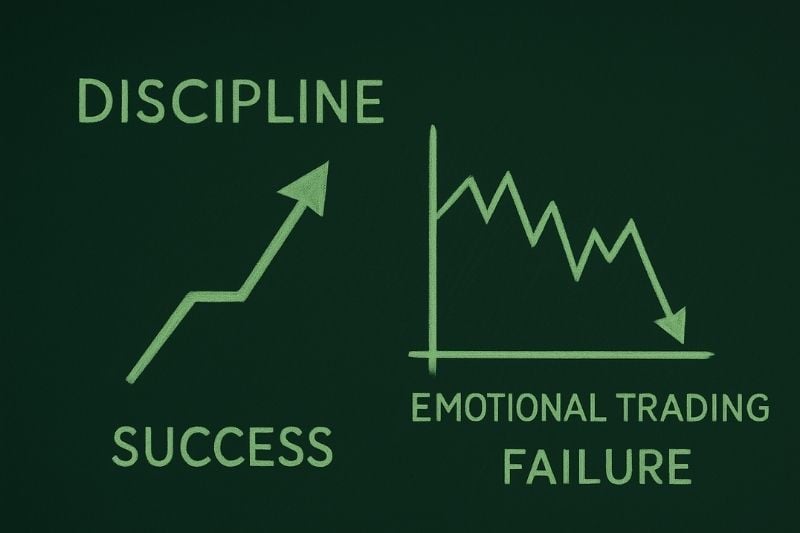
Risk management is the foundation of funded trading. When traders fail to respect risk limits, everything else collapses. Common mistakes include risking too much per trade, increasing position size after a loss, stacking positions impulsively, widening stop losses, or letting losses run out of fear or denial.
Emotional trading amplifies these mistakes, especially after a losing streak or during volatile sessions. The urge to force setups or recover quickly is one of the strongest drivers behind blown funded accounts.
Ignoring Market Conditions
Not every market environment suits every strategy. Trend traders struggle in choppy phases, and range traders often get trapped in strong breakouts. Many traders blow accounts because they continue using the same approach even when market volatility or structure clearly does not support it.
Not Having a Real Edge
Some traders lose funded accounts simply because they do not have a proven edge. They rely on random setups, untested ideas, or strategies that look good in theory but fail in real market conditions. Without an edge that works consistently over time, even perfect discipline cannot save a funded account.
Lack of a Trading Plan or Journal
Without a trading plan, every setup becomes random and inconsistent. Without a journal, recurring mistakes remain hidden. Traders who do not track their behaviour and performance repeat the same errors until the account is breached.
Those who document and review their sessions build awareness, discipline, and long-term consistency.
The Real Reason Behind Most Breaches
Blowing a funded account is rarely about the market itself. It is almost always the trader’s behaviour, discipline, decision-making, and the strength of their edge. Even experienced traders lose accounts when they treat the firm’s capital differently from their own or fail to follow their rules.
How to Recover After Blowing a Funded Account?

Blowing a funded account may feel like a major setback, but it does not define your trading career. Real recovery comes from understanding what went wrong, calming your emotions, and rebuilding discipline through structured practice.
A Setback, Not the End
Many traders in the financial markets have lost funded accounts and later rebuilt stronger results through discipline, reflection, and a better understanding of prop trading. Recovery is not about rushing back into trading opportunities but identifying what went wrong and rebuilding with strict risk management rules.
Pause, Reset, and Review
After a breach, stop trading immediately and give emotions time to settle, as trading while frustrated leads to repeated mistakes. Once calm, review every trade taken before the breach and check whether you respected drawdown limits, followed your plan, adapted to market conditions, managed position size properly, and used logical stop losses.
Write everything in your journal, as journaling helps you see patterns clearly, learn from mistakes, limit risk, and grow as a trader.
Backtest, Build Your Edge, and Rebuild Discipline
After journaling, backtest your strategy to confirm whether it truly works across different markets, timeframes, and conditions. A trader without a proven edge cannot maintain a funded account long term, so focus on creating a clear strategy, testing it thoroughly, refining it, and trading it live with consistency.
Once you understand your mistakes and have validated your edge, spend one to two weeks on a demo account. Demo trading helps rebuild confidence and sharpen execution without risking another breach. Use fixed risk, consistent sizing, strict stop losses, and focus only on high-quality setups to reconnect with your process and discipline.
Strengthen Your Risk Management Framework
Funded accounts require strict risk management rules, so your own must be even tighter. Risk no more than 0.25 to 0.50 percent per trade, set a personal daily stop below the firm’s, and define clear criteria for valid setups and volatility adjustments. Traders who respect their rules consistently limit risk and avoid future breaches.
Best Practices to Protect Your Next Funded Account

| Best Practice | Why It Matters | How to Apply It |
| Know all the rules clearly | Prevents accidental breaches | Review drawdown, news rules, and minimum days |
| Use strict position sizing | Protects capital and mental state | Risk 0.25–0.50% per trade |
| Follow your trading plan | Builds consistency | Trade only setups that match your strategy |
| Journal your trades | Reveals repeated mistakes | Write down behaviour, setups, and results |
| Backtest your strategy | Builds a real edge | Test across markets and conditions |
| Avoid emotional trading | Reduces impulsive decisions | Stop trading after losses or stress |
| Trade in alignment with market conditions | Matches your strategy to the market | Adapt or stand aside in bad conditions |
Conclusion
Blowing a funded account is not the end of your trading journey. It is an opportunity to improve your trading skills, understand your mistakes, and strengthen your risk management techniques.
Trading always involves financial risk, but in prop trading, this risk is far lower than traders assume because you are not risking your own money.
Retail traders who stay disciplined, refine their strategy, and continue trading with a structured approach can protect their capital, limit risk, and turn future trading opportunities into long-term success.
Take the next step toward a successful trading career
Join Top One Trader and access reliable capital, transparent rules, fast payouts, and a structured environment designed for disciplined traders who want long-term success. You also gain access to ongoing educational content, market insights, and practical guidance to help you grow as a trader.